
Sailing Trips With Children Made Easy in Crete
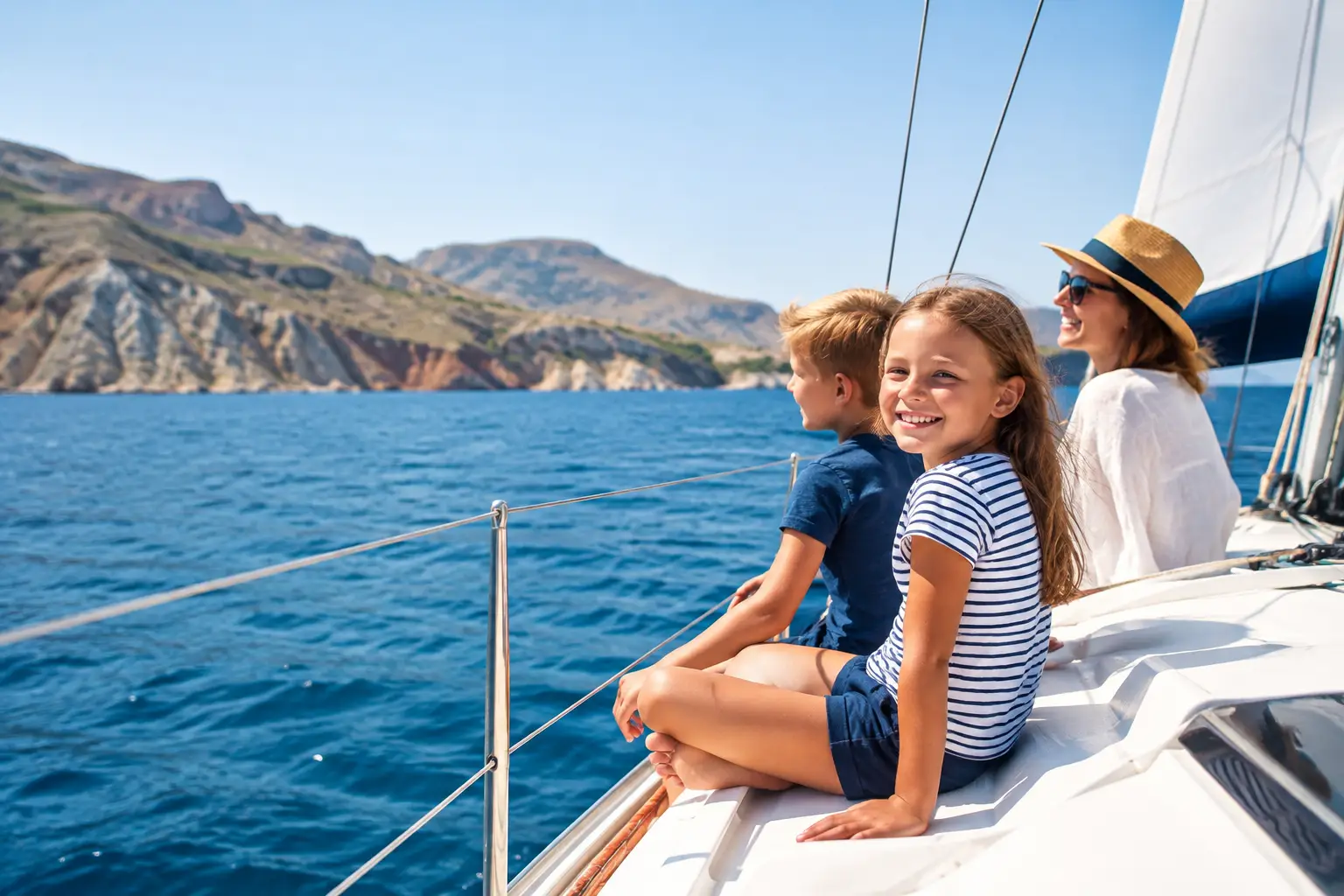
A child spots the first flash of silver fish beneath the yacht, then suddenly the schedule stops mattering. That is the quiet magic of sailing trips with children: a family day becomes less about keeping everyone entertained and more about giving them room to notice the sea. From Heraklion, a cruise toward Dia Island offers that rare holiday combination - real adventure, plenty of comfort, and time to simply be together.
The best family sailing day is not the one packed with activities. It is the one planned around the children on board, with enough shade, easy swimming, good snacks, and a crew that knows when to explain something interesting and when to let everyone relax.
Why sailing trips with children work so well
Children usually do not need to understand sailing to enjoy it. They are curious about the sails filling with wind, the sound of the hull moving through the water, and the possibility of seeing fish, seabirds, or a coastline that looks completely different from the beach. For parents, a yacht creates a welcome change of pace from pool days, car rides, and crowded attractions.
A trip to Dia Island is particularly family-friendly because the destination is part of the experience. The island rises from the Aegean just offshore from Heraklion, with clear water and sheltered bays that invite an unhurried swim or snorkel. Rather than hopping between several busy stops, families can settle into one beautiful place and enjoy it properly.
There is a useful trade-off to consider. A short morning or sunset cruise is often ideal for younger children who may tire quickly or still need an afternoon rest. A full-day private experience gives older children more swimming time and allows the day to move at your family’s rhythm. Neither option is automatically better. The right choice depends on ages, confidence in the water, and how much structure your group prefers.
Choose the right boat and trip style
For a first family cruise, crewed sailing is the easy choice. A professional captain handles navigation, weather decisions, and anchoring while the crew helps guests settle in, shares local stories, and keeps the atmosphere relaxed. Parents are not asked to manage a boat and a child at the same time, which makes a real difference.
Semi-private trips suit families who enjoy meeting other travelers and want the value of a shared outing without the feel of a large excursion boat. Capacity matters here. A spacious sailing yacht with a limited number of guests leaves room to sit comfortably, move safely, and find a shady corner when a little one needs a break.
A private cruise is worth considering for families with babies, very young children, grandparents, or children who are nervous swimmers. You can be more flexible about departure timing, swimming duration, music, food preferences, and the pace of the day. It also gives shy children time to become comfortable without a crowd around them.
For experienced sailors planning a week-long Greek island vacation, a skippered or bareboat charter opens another kind of family adventure. It brings more freedom, but it also requires realistic planning. Longer passages, cabin routines, and changing weather can be wonderful for school-age children and teens, yet may be demanding for toddlers. A skipper can make a multi-day itinerary feel far more restful, especially when the goal is family time rather than testing sailing skills.
Safety begins before the yacht leaves the marina
Families should feel welcome to ask practical questions before booking. Are properly sized life jackets available for children? Is there shade on board? What happens if the forecast changes? Is the swimming stop chosen with sea conditions in mind? Clear, straightforward answers are a good sign of a professional operation.
On board, listen closely to the crew’s safety briefing, even if you have sailed before. Children should know where they may sit while the yacht is moving, which areas are off-limits, and that they need to ask an adult before entering the water. The rules are simple, but they help children feel secure instead of restricted.
A life jacket is not a sign that a child cannot swim. It is sensible protection around moving boats, changing conditions, and moments when adults are getting towels, cameras, or snacks. For younger children, keeping the jacket on near the water is an easy family rule. For confident older swimmers, follow the captain’s guidance for each swimming stop.
It also helps to set expectations before departure. Tell children that a sailing yacht moves with the wind and waves, that they may feel a little different than they do on land, and that the crew is there to help. Calm preparation is often more effective than making a big fuss about possible seasickness.
Pack lightly, but pack for comfort
You do not need to bring your whole beach bag. Sunscreen, hats with a secure fit, sunglasses, swimwear, and a lightweight cover-up are the essentials. A rash guard is especially useful for children who happily stay in the water long after adults are ready for shade.
Bring one dry layer for each child. Even in warm Cretan weather, the breeze can feel cool after swimming or near sunset. If your child is prone to motion sickness, speak with a medical professional before travel about suitable options, and offer a light meal rather than sending them aboard either hungry or overly full.
For younger children, a familiar small item can help: a favorite snack if dietary needs require it, a compact toy, or a towel they recognize. Avoid bringing anything precious that cannot handle saltwater. The sea has a remarkable talent for claiming sunglasses, toys, and electronics.
Most importantly, keep phones in a dry bag and then put them down for a while. Children remember the grown-up who swam beside them, pointed out a fish, or watched the sail go up far longer than they remember a perfectly documented afternoon.
Make swimming and snorkeling feel relaxed
The first swim is often the moment that defines the day. Some children leap in immediately; others need to sit at the edge, watch for a few minutes, and enter holding a parent’s hand. Both responses are completely normal. Do not rush the hesitant child. Clear water is more inviting when they have time to trust it.
Snorkeling works best when introduced as a small game rather than a lesson. Start close to the yacht, look for a fish or an interesting rock, and let children use a flotation aid if it helps them relax. A mask that leaks or fogs can quickly spoil the mood, so ask the crew for help with fit before heading farther from the swim ladder.
Keep the goal modest. Ten happy minutes in the water can be better than an ambitious hour that ends in cold, tired tears. Afterwards, a snack, a towel, and a quiet spot in the shade reset everyone quickly.
Give children a role, not a responsibility
A sailing trip becomes more memorable when children feel included. Depending on their age and the captain’s direction, they may enjoy helping spot Dia Island, watching the anchor go down, learning a few words such as bow and sail, or identifying the color of the water as the yacht enters a bay.
These small moments build confidence without placing responsibility on them. They also create natural conversation. Ask what they saw underwater, which part of the yacht they liked best, or whether they noticed how the wind changed. Teenagers may appreciate the chance to learn more about route planning or take photos from a new perspective, while younger children are often delighted simply to be named the official fish spotter.
Cretan Yachts plans its family-friendly cruises with this balance in mind: attentive crew support, modern yachts, refreshment breaks, and enough calm space for each guest to enjoy the journey their own way.
A few details that prevent a difficult day
Try not to schedule a demanding sightseeing tour immediately before a cruise. Children arrive happier when they have eaten, rested, and are not already hot and overstimulated. Arrive with time to use the restroom, meet the crew, and board without pressure.
Be honest when booking about your children’s ages, swimming ability, allergies, and any mobility or medical considerations. This is not extra information - it helps the crew prepare the right welcome and gives parents more confidence once the yacht departs.
Finally, release the idea that every family member must love every moment. One child may spend the whole swim stop snorkeling, while another may prefer snacks and a shaded seat with a view. A good sailing day has room for both. Let the sea set a gentler pace, and your children may surprise you with how much they take in.
